


The Problem Isn’t Understanding Web3 — It’s Knowing Where to Start
Most business leaders no longer dismiss Web3 outright. What’s changed is not awareness—but pressure.
Customers are beginning to expect more control over their digital experiences. Platforms are becoming less predictable. And new competitors are building systems that operate differently from the start.
The conversation has shifted from:
“What is Web3?” to “Where does this actually apply to our business?”
This is where most organizations get stuck. Not because Web3 is too complex—but because the entry points are unclear.
The mistake many companies make is trying to approach Web3 as a single transformation. In reality, adoption doesn’t happen all at once.
It happens through specific, targeted entry points.
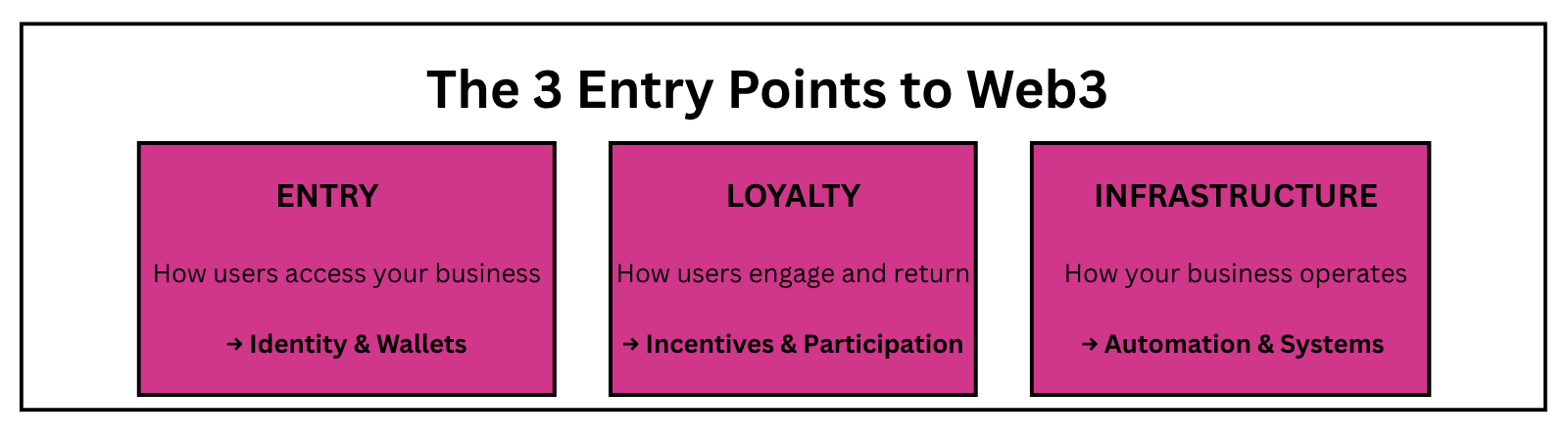
In practice, there are three that matter most: Entry. Loyalty. Infrastructure.
Web3 Adoption Is Not One Decision
Web3 is not a product you implement or a system you install. It is a set of capabilities that can be applied to different parts of your business.
That means organizations don’t “move to Web3.” They adopt pieces of it where it creates the most value.
The companies making real progress are not trying to do everything—they are identifying one high-impact starting point, learning from it, and expanding deliberately.
Entry: Rethinking How Customers Access Your Business
The first—and often simplest—entry point is how users enter your ecosystem.
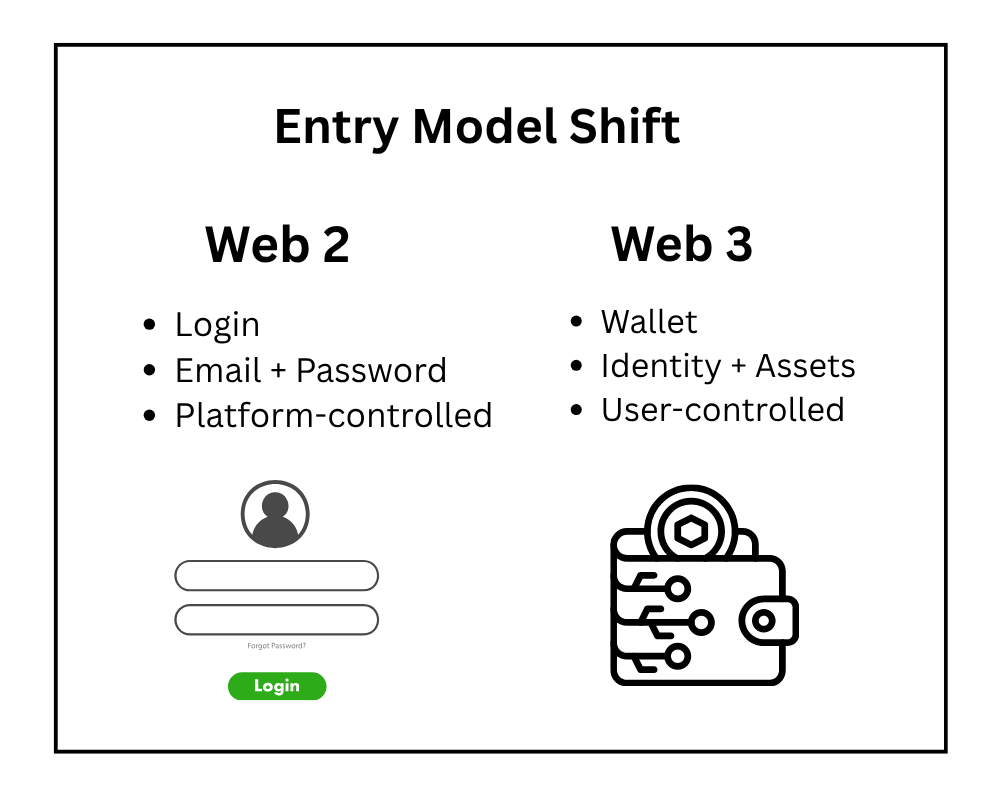
In Web2, access is typically controlled through:
- email logins
- usernames and passwords
- platform accounts
These systems are fragmented and controlled by intermediaries.
Web3 introduces a different model: Wallet-based access and portable identity
Instead of logging in through a platform, users can connect a wallet that represents:
- identity
- assets
- permissions
This creates new possibilities:
- frictionless login experiences
- portable identity across platforms
- direct relationships with users
For businesses, this means shifting from: “accounts we manage” → “identities users control”
For many organizations, this is the first meaningful shift.
It changes the relationship from something a company manages to something a user controls—and that distinction becomes increasingly important as digital ecosystems become more interconnected.
Loyalty: From Points to Participation
Most businesses already understand loyalty.
But traditional loyalty systems are limited:
- points are siloed
- rewards are rigid
- engagement is passive
Web3 introduces a new approach: Tokenized and programmable loyalty systems
Instead of static point programs, businesses can create systems where:
- rewards are owned by users
- incentives are dynamic
- participation is visible and transferable
Examples include:
- membership tokens
- digital passes
- tiered access based on behavior
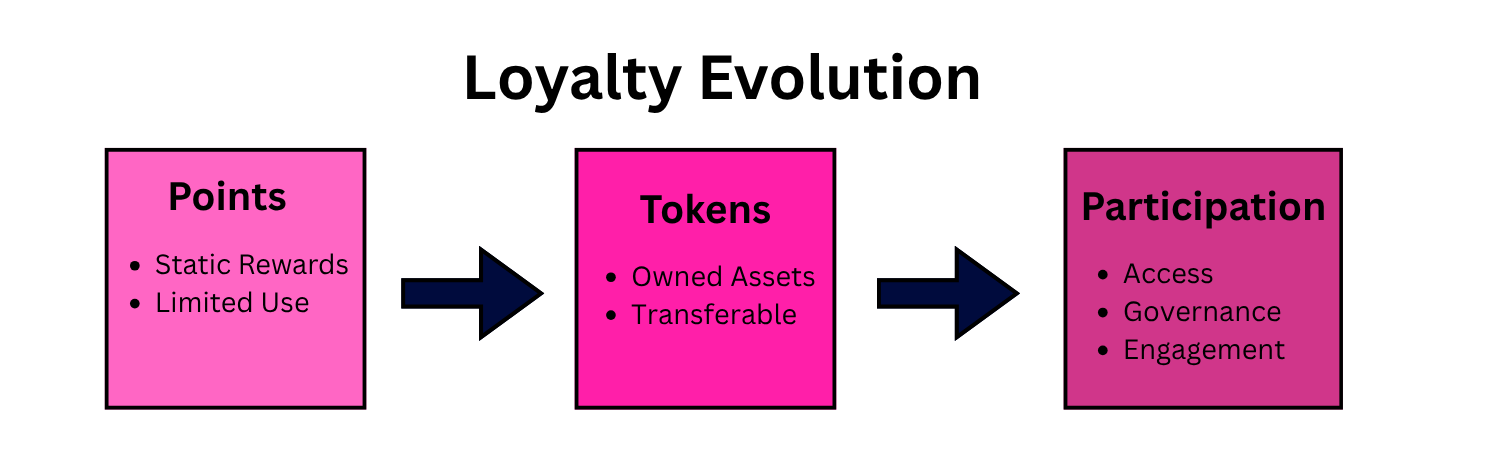
This shifts loyalty from a marketing function to a system of engagement and alignment.
Customers are no longer just rewarded—they become participants in the ecosystem.
This is why many companies are experimenting here first. It allows them to test Web3 capabilities in a way that is visible to customers, measurable in engagement, and relatively low-risk compared to deeper operational changes.
Infrastructure: Where the Real Transformation Happens
The third entry point is the most powerful—but also the most complex.
It sits beneath the surface: Operational infrastructure powered by smart contracts
This is where Web3 moves beyond customer experience and begins to reshape how businesses operate.
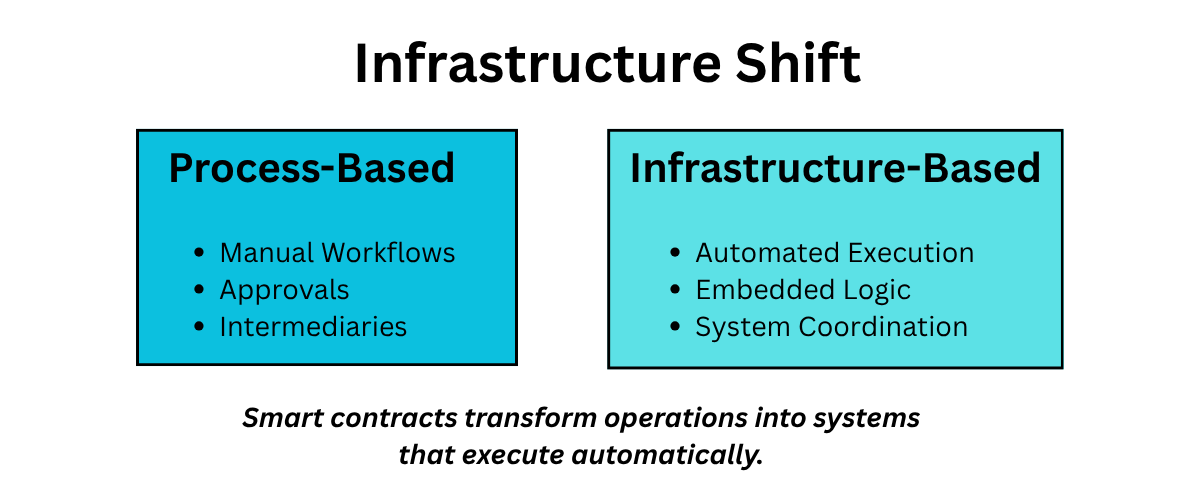
Smart contracts can automate:
- payments and settlements
- revenue sharing
- access control
- multi-party coordination
Instead of managing workflows manually, businesses can design systems that execute automatically.
This introduces:
- reduced operational friction
- increased transparency
- fewer intermediaries
This is not just efficiency—it is a shift in how organizations design processes altogether. This is also where the long-term advantage lies.
While entry and loyalty improve how businesses engage with customers, infrastructure determines how efficiently and reliably the business itself operates. Over time, this is where differentiation compounds.
Why These Three Entry Points Matter
Each of these entry points serves a different purpose:
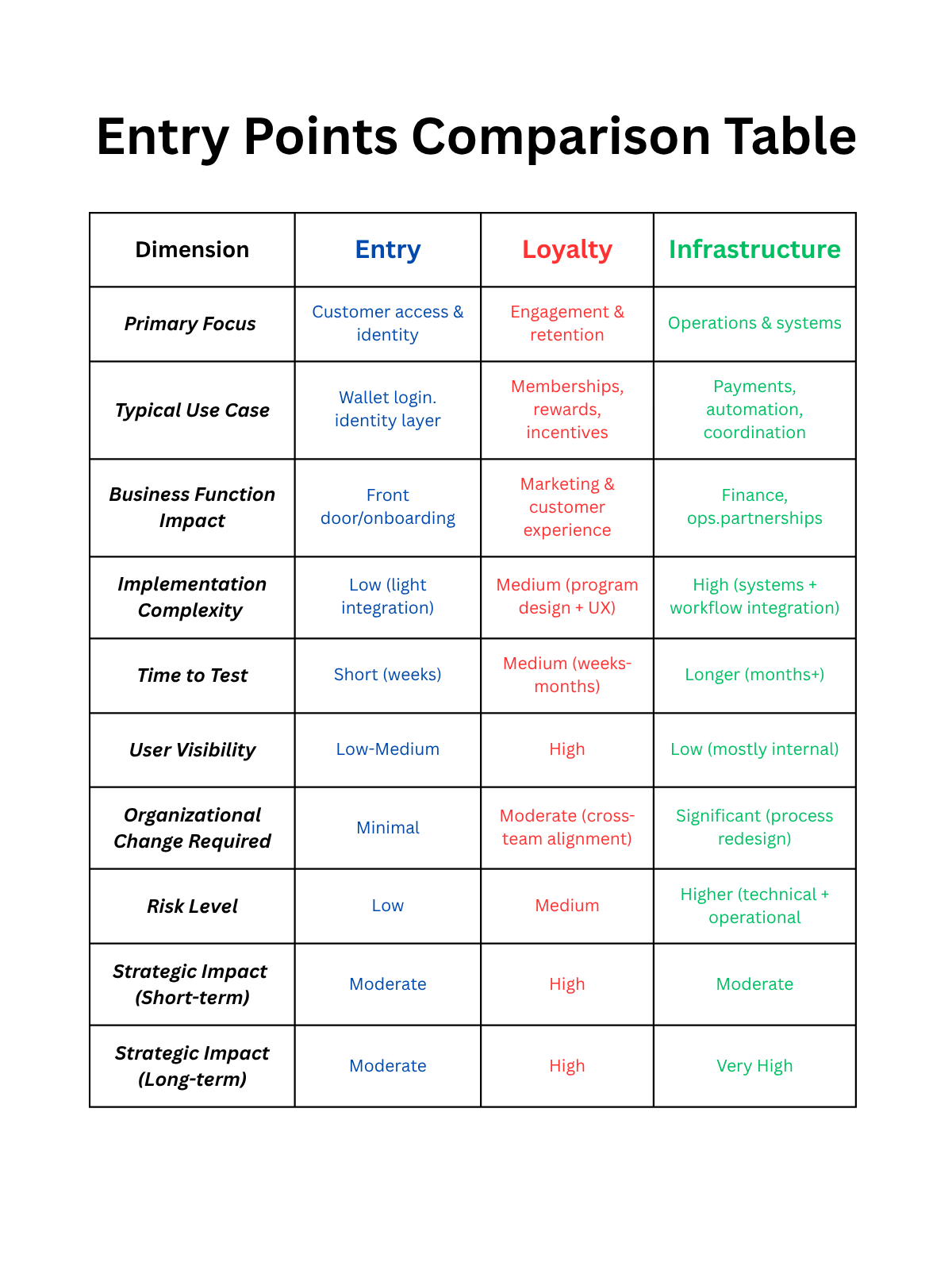
This allows businesses to choose a starting point based on:
- their goals
- their risk tolerance
- their technical readiness
Most Companies Start in the Wrong Place
A common mistake is jumping straight into infrastructure.
It is the most attractive on paper—but also the most difficult to implement effectively.
It requires:
- deeper technical integration
- stronger compliance alignment
- more organizational change
Without prior experimentation, organizations often underestimate the complexity and overestimate the immediate return.
In contrast, Entry and Loyalty are:
- faster to test
- easier to implement
- more visible to customers
They provide a way to build internal understanding and external momentum before tackling deeper transformation.
A Practical Way to Think About It
Instead of asking: “Should we adopt Web3?”
A better question is: “Where can Web3 remove friction or create new value in our business?”
Then map that answer to one of the three entry points:
- Entry → customer access and identity
- Loyalty → engagement and incentives
- Infrastructure → operations and automation
This creates a clear and manageable path forward.
The Strategic Takeaway
Web3 adoption does not begin with technology.
It begins with choosing the right entry point.
For most organizations, that means:
- starting with Entry or Loyalty
- learning through small implementations
- expanding toward Infrastructure over time
The question is no longer whether Web3 will impact your business.
The question is where that impact shows up first—and whether you recognize it early enough to respond intentionally.
Entry. Loyalty. Infrastructure.
The organizations that understand these starting points will move with clarity. The rest will react to change after it has already taken hold.
Building from the Right Starting Point
At Argot, we help organizations identify where Web3 capabilities align with real business needs—and how to implement them in a structured way.
Because the goal is not to adopt Web3 broadly.
It is to apply it where it creates measurable advantage.