

The Internet Is Changing Again
Over the past three decades, the internet has transformed how businesses operate, how communities form, and how value moves across the world.
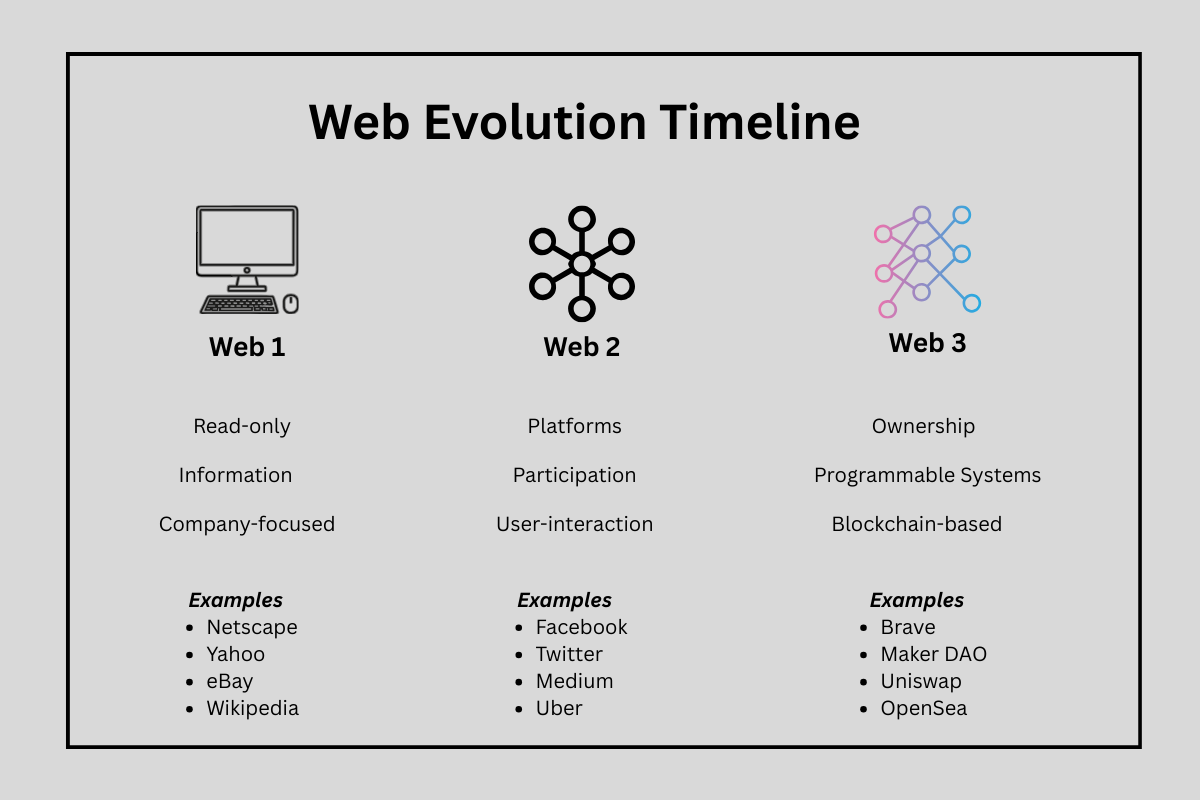
- Web1 gave us access to information
- Web2 gave us platforms and participation
- Now a third generation is emerging, Web3. is introducing something new: digital ownership and programmable systems
But the term is often misunderstood. For some, it evokes images of cryptocurrency speculation or digital collectibles. For others, it feels like a vague technological buzzword.
In reality, Web3 represents something more significant: a structural shift in how digital systems organize value and authority.
Understanding that shift requires stepping back and examining how the internet evolved from Web1 to Web2—and why Web3 is fundamentally different.
The Web1 Era: The Internet of Information
The early internet of the 1990s and early 2000s—often called Web1—was primarily a read-only environment.
Users visited websites, consumed content, and occasionally interacted through basic tools like forums or email. Most sites functioned like digital brochures or publications.
Key characteristics of Web1 included:
- Static websites
- Limited user interaction
- Decentralized hosting across many small servers
- Minimal monetization structures
Businesses during this era used the internet primarily as an information distribution channel rather than a core operational infrastructure.
Ownership and control were relatively straightforward: website owners controlled their content, and users consumed it.
The Web2 Era: The Internet of Platforms
The next transformation came with Web2, beginning in the mid-2000s.
Technologies like dynamic web applications, cloud infrastructure, and social networking allowed users not only to read information but also to create and share it.
This era produced the platforms that now dominate digital life:
- Social media networks
- Search engines
- Content marketplaces
- App ecosystems
Companies such as Google, Facebook, Amazon, and Apple built powerful platform economies by connecting billions of users and organizing massive amounts of data.
However, the Web2 model also introduced a fundamental trade-off.
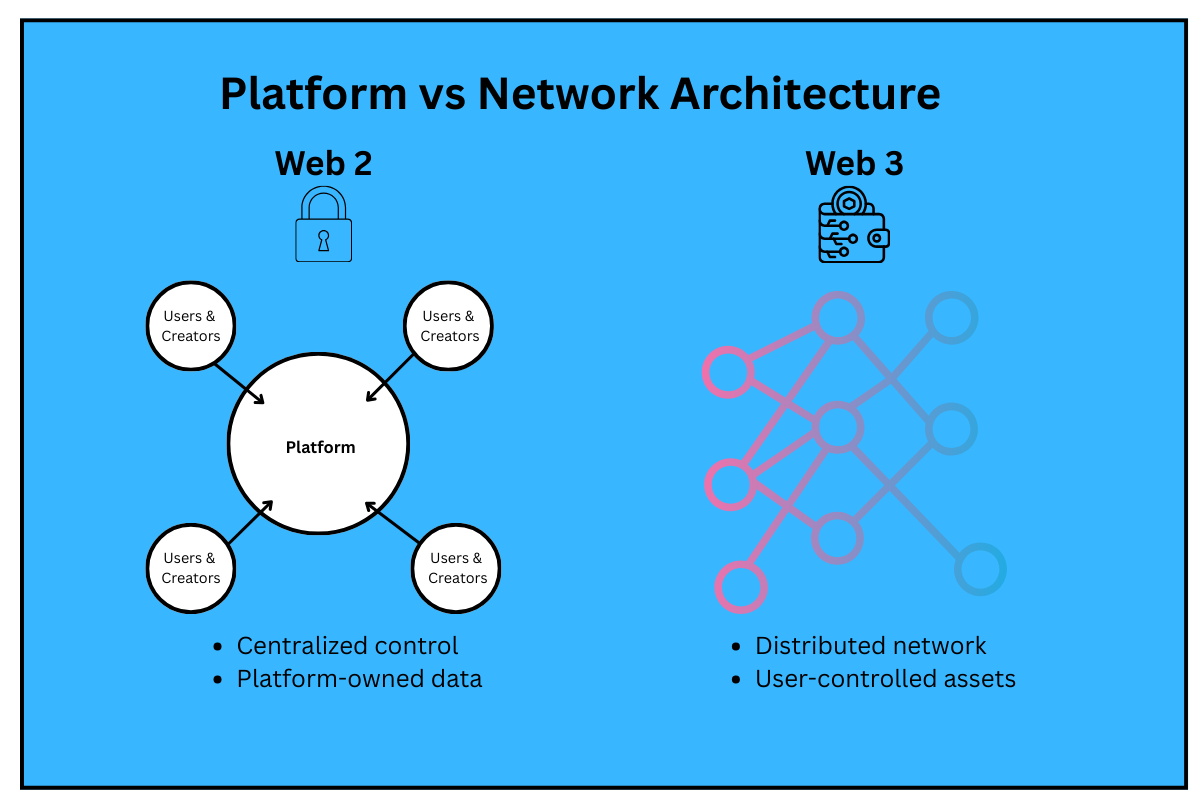
Users gained convenience and connectivity—but platforms gained control over data, distribution, and monetization.
In Web2:
- Platforms own the infrastructure
- Platforms control the algorithms
- Platforms capture a large share of the economic value
For businesses, this meant operating within ecosystems where access to customers increasingly depended on platform policies and algorithms.
The Web3 Shift: The Internet of Ownership
Web3 introduces a new architectural principle: digital ownership secured by decentralized infrastructure.
Instead of relying on centralized platforms to verify transactions and manage data, Web3 systems use blockchains and distributed networks to coordinate activity.
This enables something the internet previously lacked: native digital ownership.
Users can now hold and control digital assets directly through cryptographic wallets rather than through platform accounts.
This seemingly technical change has deep strategic implications.
It means that in Web3:
- Users can own digital assets without intermediaries
- Transactions can execute automatically through smart contracts
- Communities can govern digital systems collectively
Ownership moves from platforms to participants.
Rewiring Trust
Trust is one of the most important—yet invisible—components of digital systems.
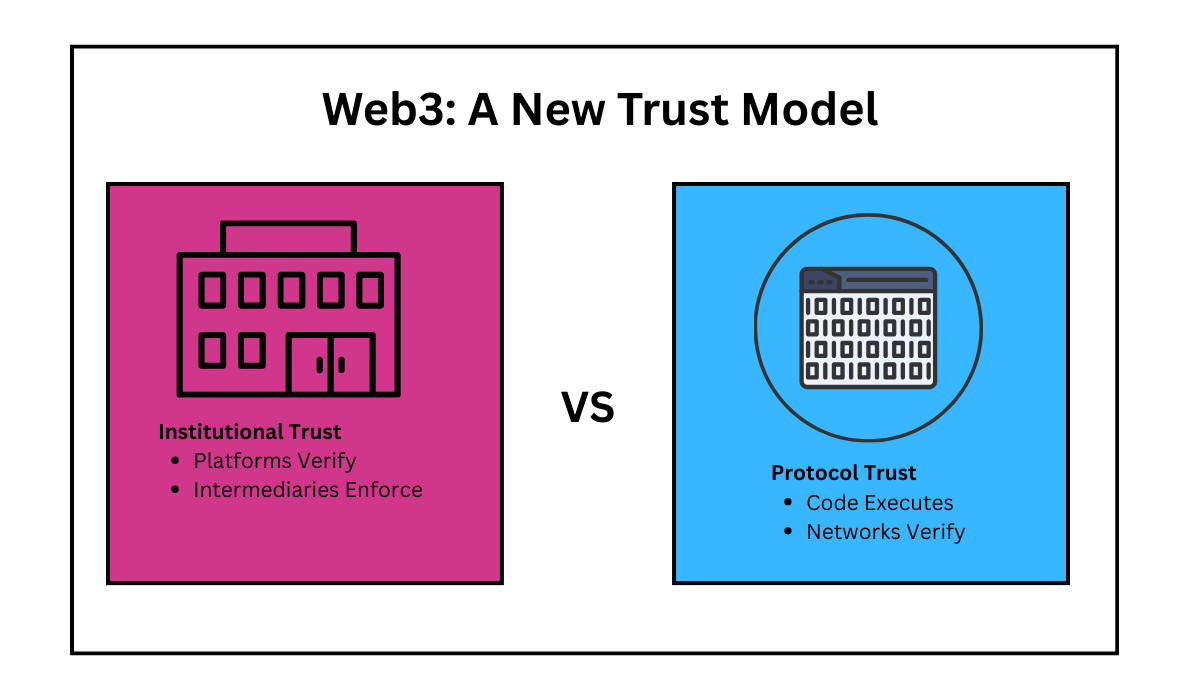
In Web2, trust is mediated through institutions:
- Banks process financial transactions
- Platforms verify identity and reputation
- Intermediaries enforce agreements
Web3 replaces many of these functions with cryptographic verification and automated execution.
For example:
- Blockchain ledgers provide transparent transaction histories
- Smart contracts enforce agreements automatically
- Distributed consensus validates network activity
In effect, Web3 shifts trust from institutions to systems.
Rather than relying solely on organizations to enforce rules, participants rely on transparent protocols that anyone can verify.
This does not eliminate institutions entirely—but it significantly reduces the number of intermediaries required to coordinate economic activity.
Rewiring Value
Perhaps the most profound change introduced by Web3 is how value flows through digital ecosystems.
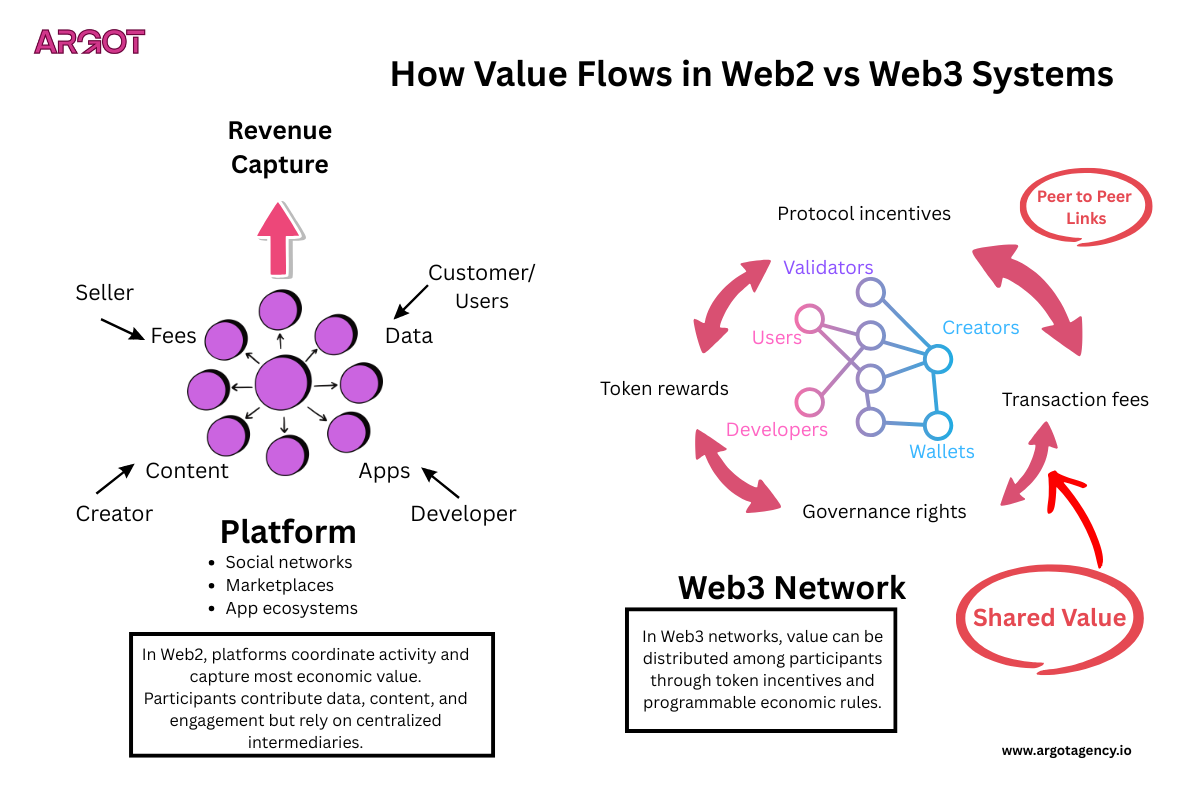
In Web2, value accumulation tends to concentrate at the platform level. Users contribute data, content, and engagement, but platforms capture the majority of economic upside.
Web3 systems distribute value more broadly through tokenized incentives and programmable ownership structures.
Tokens can represent:
- Access to services
- Governance rights
- Economic participation in a network
This allows communities and developers to share in the success of the systems they help build.
In other words, Web3 turns networks into participatory economies rather than centralized marketplaces.
Why This Matters for Businesses
For executives and founders, the Web3 shift is less about technology and more about strategic positioning.
Three implications are particularly important.
1. Customer Relationships Change
Web3 enables direct interaction with customers through wallets and digital identity systems rather than through platform accounts.
This reduces reliance on algorithm-driven distribution channels and gives companies greater control over their customer relationships.
2. Operations Become Programmable
Smart contracts can automate tasks that currently require manual oversight or third-party enforcement.
Payments, royalties, supply chain verification, and digital access control can all be executed automatically.
This introduces a new layer of operational efficiency and transparency.
3. Communities Become Stakeholders
Web3 allows businesses to design systems where users participate economically in the growth of a platform.
Instead of passive audiences, companies can cultivate communities that share incentives and contribute to network growth.
For certain business models—particularly marketplaces and digital ecosystems—this can be a powerful advantage.
Web3 Is Not a Replacement—It’s an Evolution
It is important to recognize that Web3 will not simply replace Web2 overnight.
Most organizations will adopt hybrid models that combine traditional infrastructure with decentralized components.
Web2 platforms will continue to exist, but they may increasingly integrate blockchain-based systems for identity, payments, and ownership.
In that sense, Web3 should be understood less as a new internet and more as a new economic layer built on top of the existing one.
The Next Chapter of the Internet
The transition from Web2 to Web3 is still in its early stages.
The tools are evolving, regulatory frameworks are maturing, and businesses are experimenting with new models of ownership and collaboration.
But the direction is increasingly clear.
The internet is moving toward systems that prioritize:
- Verifiable ownership
- Transparent trust mechanisms
- Participatory value creation
For organizations willing to explore these possibilities thoughtfully, Web3 offers an opportunity not simply to adopt new technology—but to rethink how digital systems create and distribute value.
Building the Web3-Ready Enterprise
At Argot, we help organizations navigate the strategic implications of Web3—from understanding its foundations to designing practical adoption roadmaps.
Because the companies that succeed in the next era of the internet will not be those chasing trends, but those aligning technology, incentives, and strategy from the start.
→ Learn more about our Web3 strategy services at argotagency.io